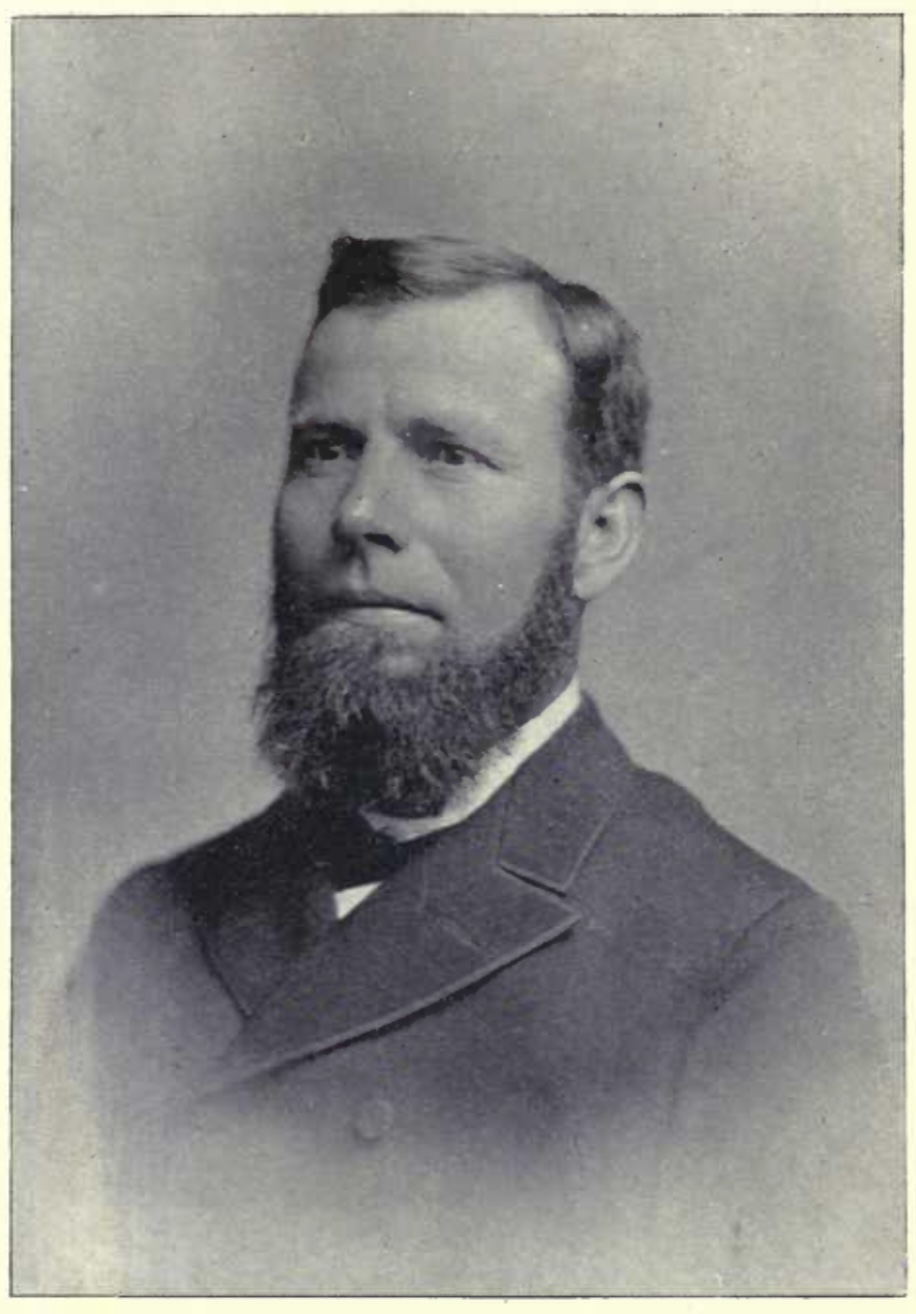
From The Daily Record, Kitchener, Ontario, Thursday, January 13, 1927, Page 1:
The Lutheran Church of Canada has sustained a distinct loss in the death of its oldest and most widely known minister, Rev. Dr. Frederick Veit of this city, former president of the Canada Synod and one of the founders of the Evangelical Lutheran Seminary at Waterloo, who passed away at his home on Vernon avenue this morning in his 82nd year. The late Rev. Dr. Veit had been ailing for about a year and had been confined to his home for some months and his death was not unexpected. In the death of Rev. Dr. Veit there has passed a pillar of the church who was for many years identified with its progress and development. Respected and admired as a citizen of high ideals, enjoying the confidence of his fellow pastors of the church, interesting as a conversationalist and generally recognized as an able student of theology and public affairs, Rev. Dr. Veit during his long and active life made many friends in and out of the church and his death has occasioned widespread sorrow.
The late Rev. Dr. Veit was born on February 16, 1845 in Michelbach, Wurttemberg, Germany, and came to America in 1865 after receiving his preparatory education in that country. He studied theology in Philadelphia from 1869 to 1872 and was ordained to the ministry in May 1872 by the Ministerium of Pennsylvania. Shortly afterwards, in the same year, he assumed the pastorate of Trinity Lutheran church, Tavistock, which congregation he served exclusively for 45 years. This is one of the largest Lutheran congregations in the Synod. In that long period, Trinity church enjoyed marked prosperity and activity, an indication of the great confidence the members of the church had in their pastor. During his pastorate a new church, including a Sunday school building, was built and the church was the scene of many eventful activities of the Canada Synod.
Faithfully and conscientiously devoted to the interests of Trinity church, Rev. Dr. Veit nevertheless found it possible to devote considerable time to the furtherance of the Lutheran church generally and labored untiringly for many years in various capacities. Associated with him in the early days were pioneers who went thru the trials and hardships of the decades occasioned by the scarcity of pastors, lack of Lutheran educational institutions and proper transportation. Among these are the names of Rechenberg, Fishburn, Wurster, Chinger, Kaeszmann, Muenzinger, Stahlschmidt, Karl Gerndt, Heinrich Kaeler, Christian Friedrich Spring, Ulrich Berner, Jacob Brezing, Ernst M. Genszmer. Among the associates also was the late Heinrich Van der Smissen of Toronto who served as treasurer of the Canada Synod for many years and who occupied a prominent place in the church and in the city of Toronto. Pastors who were of a later school and who for many years were associated with Rev. Dr. Veit were the late Rev. Dr. E. Hoffmann, president of the Waterloo Seminary and ex-president of the Synod, and Rev. J. Strempfer, formerly of Elmira and others.
Rev. Dr. Veit was first elected to the presidency of the Canada Synod at the meeting held in Berlin, now Kitchener, in 1882, succeeding Rev. C. Spring, of New Hamburg, who also was one of the outstanding Lutheran pastors of the day and whose charge was located only nine miles from that of the former. The deceased served as president in subsequent years as follows: 1883, 1884, 1888, 1889, 1890, and 1891. During his occupancy of the presidency of the Synod he was also associated with the work of the General Council of the Lutheran church of North America at whose meetings he was frequently a delegate.
Two epochal events stand out in the activity of the deceased, the laying of the foundations for the Lutheran church in Western Canada and the establishment of the educational institution in Waterloo, the Evangelical Lutheran Seminary and College. It was in 1888 that he, as president of the Synod, received an urgent request from fifty to sixty families of the City of Winnipeg that he assist them in securing the services of a pastor. The president deeply impressed with the "call of sheep without a shepherd," to use his own appellation of the earnest and serious Lutherans, proceeded to Winnipeg and conducted Holy Communion services, confirmed two children and baptized two infants. Under his chairmanship, a meeting was held after the services at which the first Lutheran congregation of Western Canada was organized. The committee on missions of the Canada Synod subsequently extended a call to Rev. H. C. Schmieder of Philadelphia, father of Rev. John Schmieder of St. Matthew's church, who accepted the call and assumed his pastorate in Winnipeg in the next year. Since the organization of the first congregation of the Lutheran church in Western Canada in 1888 by the deceased, the Lutheran church has enjoyed a rapid growth altho still not able to meet all needs in the prairie provinces. The courage, faith and initiative of Rev. Dr. Veit in those days are an impressive lesson to the younger generation of pastors and laymen with regard to the spread of missions thruout Canada today.
The other event that is outstanding in the work of the deceased pastor is the early interest he took in the proposal to provide the Canada Synod with an institution where the future pastors could be trained. For many years the church was under a handicap because it had to get new pastors from either Germany or the United States. Rev. Dr. Veit was among those who supported the movement to erect a seminary and college which resulted in the establishment of the institution in Waterloo in 1911. The foresight of the deceased and his associates in assuming such a serious undertaking has proven justified as the institution has provided a long list of capable pastors to the Synod.
The late Rev. Dr. Veit thru his long years in service of the church gained a valuable experience in administration of the business of the Synod and his views as expressed to the members and laymen always carried much weight. A keen observer, an able scholar, a lover of order and system, and a conscientious upholder of a healthy Conservatism as pastor of the church of the Reformation, he spoke with authority to the benefit of the less experienced. He gave forty-five years of service not only to his own congregation but to the Lutheran church as a whole. His life and successful work as a pastor and officer of the Synod will stand out in imperishable records of the church. An indication of the appreciation of his contribution to the religious and educational interests of the province is the fact that Rev. Dr. Veit received the honorary degree of Doctor of Divinity from the University of Western Ontario last year.
The deceased was twice married. His first wife, Elizabeth Stahlschmidt of Heidelberg predeceased him in 1876. Of this union there were three children, all of whom survive, Mrs. Martha Ramthun, Church street, Kitchener, relict of the late Rev. Ferdinand Remthun of New Dundee, Ida, nurse in Lafayette College, Easton, Pa., and Marie, at home. On November 9, 1877, he was wedded to Martha Halleen, daughter of the late Rev. A. Halleen of Stratford, who survives him. Of the second union there were nine children two of whom predeceased him, one son, Frederick dying in infancy and a daughter, Martha, organist and music teacher, having predeceased him January 10, 1907, almost exactly twenty years ago. The seven surviving children of the second union are Rev. Walter C. G. Veit, of Easton, Pa., Mrs. J. M. Bolton, Toronto, Mrs. C. Kingan, Hamilton, Mrs. J. Rahn, Kitchener, Mrs. D. Norris, Toronto, Erhardt, Ottawa and Mrs. Emmerson Kalbfleisch, Tavistock. There are 22 grandchildren.
The funeral will be held Monday afternoon with a private service at the home, 19 Vernon avenue, at 1 o'clock whence the cortege will proceed to Trinity Lutheran Church and Cemetery, Tavistock, where a public service will be held.